
Durga Puja is more than a festival to visit. It is a sequence of rituals, each with its own meaning. Here is a simple guide to what happens, why it matters, and when you can see it at our puja in Sector 9, Gurugram. Everyone is welcome, and no membership is needed.
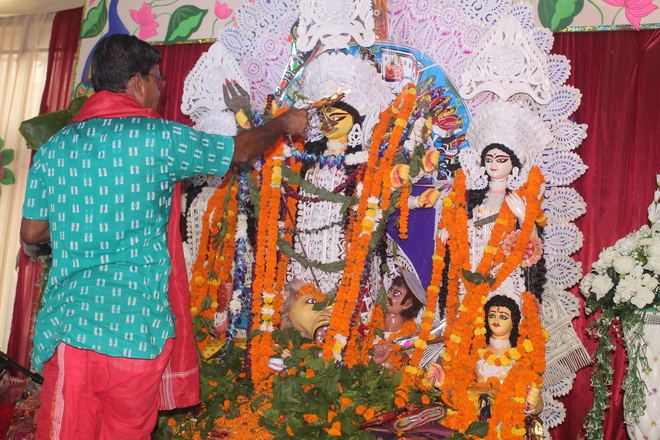
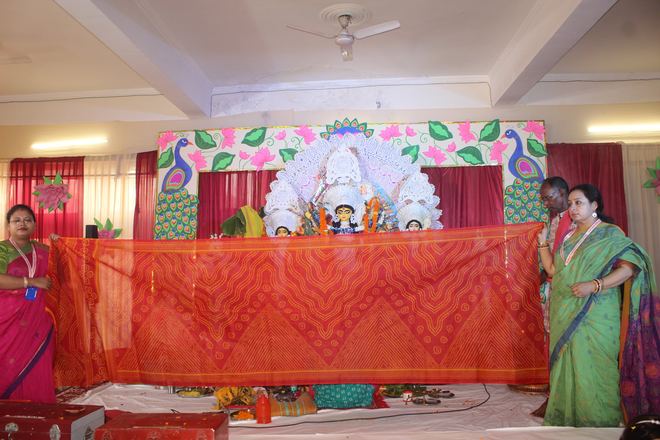
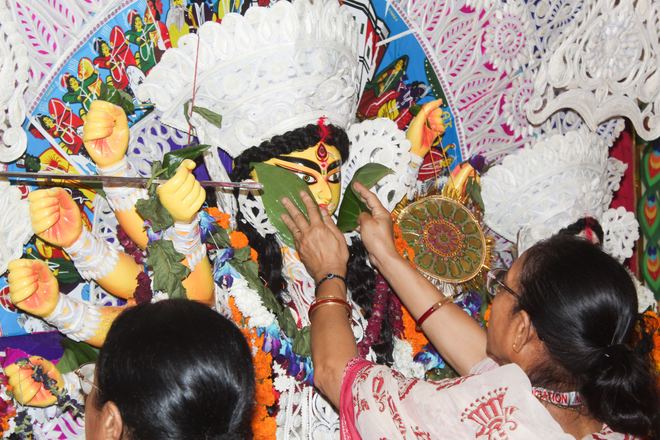
The ritual awakening of the goddess. Durga is believed to arrive from her husband's home with her children, and on Shashthi evening she is formally invoked and welcomed into the idol. This is when the face of the goddess is unveiled and the festival truly begins.
At GBA: Bodhon and Sandhya Arati, Friday 16 October, 6:30 PM.
Nine different plants, bound together and draped in a red-bordered sari, represent the goddess in her earthly, nature form. The bundle, known as Nabapatrika or Kola Bou, is bathed and then placed beside Ganesha. It marks the beginning of the main worship.
At GBA: See the morning puja on each day's schedule.
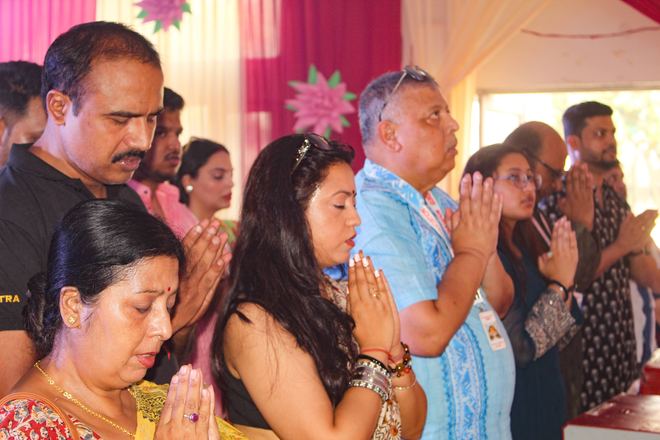
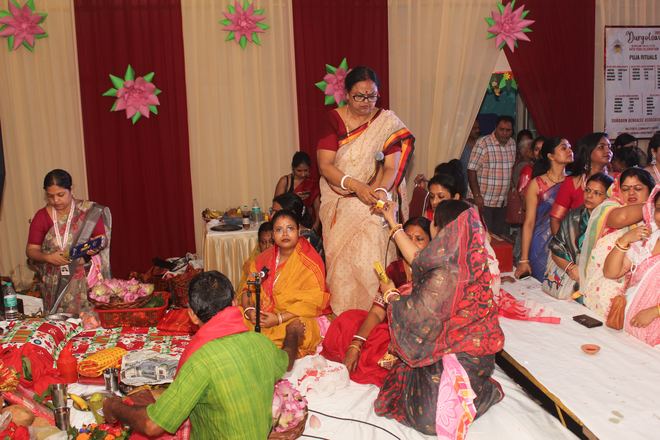
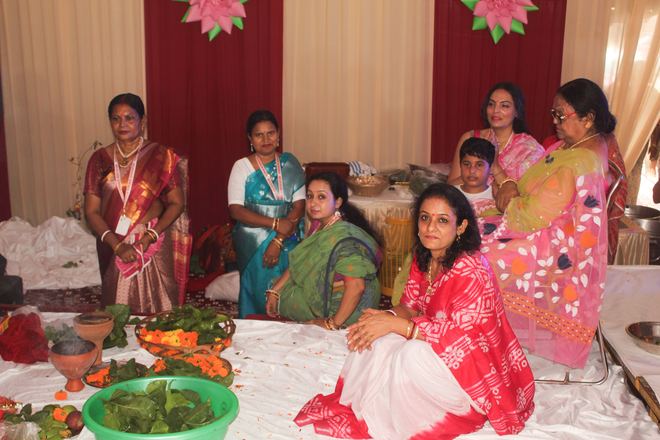
Devotees offer flowers to the goddess together, repeating the mantras after the priest. It is the most common way for everyone, of any age, to take part in the puja directly.
At GBA: Offered every morning at its own auspicious time. Exact times are on the daily schedule.
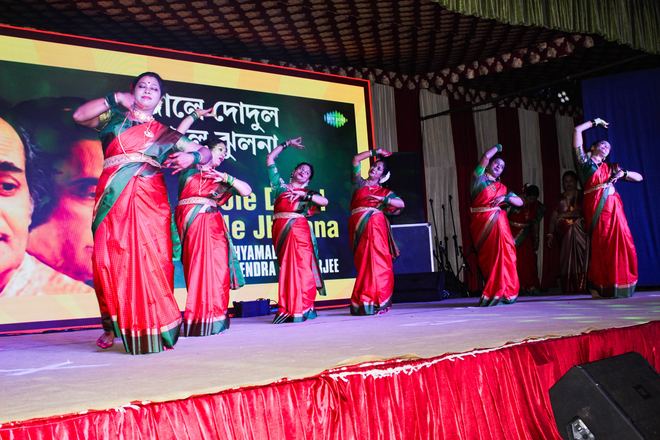
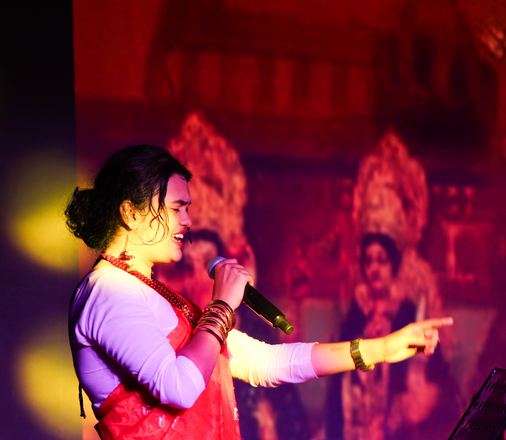
The evening worship, with lamps, incense, the conch and the sound of the dhak. The pandal is at its most atmospheric at this hour, and it opens the evening programme.
At GBA: Daily at 7:00 PM, with the cultural programme from 7:30 PM.
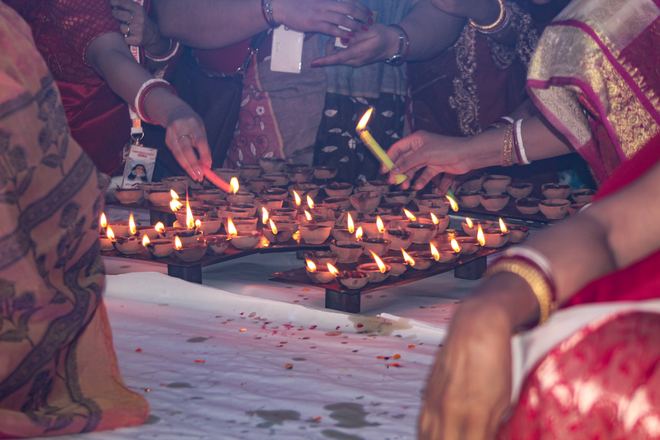
Sandhi Puja is held in the 48 minutes where the Ashtami tithi ends and Navami begins. It is believed to be the moment Durga took her fiercest form, Chamunda, to defeat the demons Chanda and Munda. It is considered the most powerful moment of the festival, and is traditionally marked by 108 lamps and offerings.
At GBA: Monday 19 October, 10:28–11:16 AM.
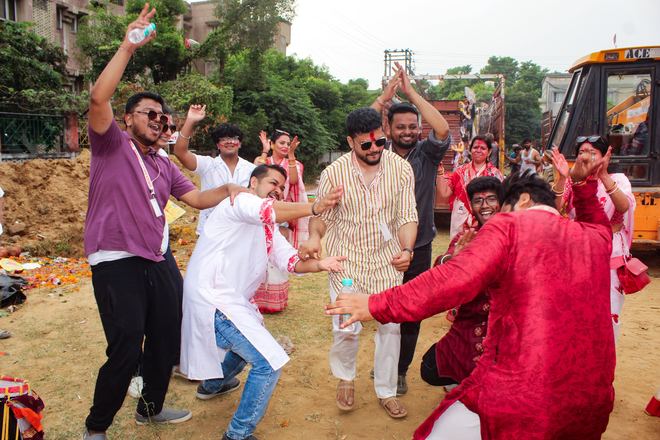
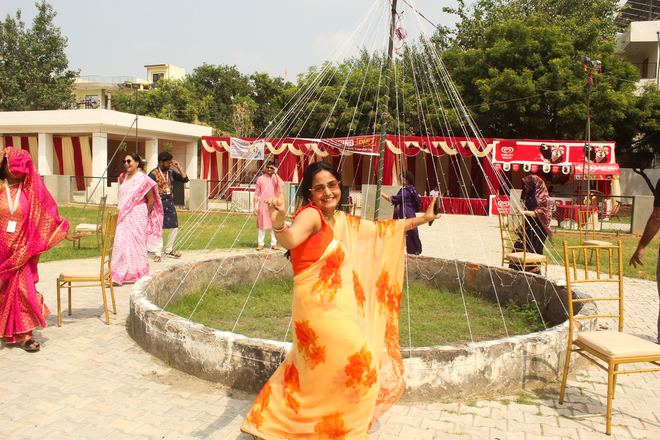
A dance performed with earthen incense burners (dhunuchi) held in hands, often to the beat of the dhak. It is a joyful offering to the goddess, and anyone can join in.
At GBA: Open to everyone at GBA. No membership is needed. Timings will be announced closer to the festival.
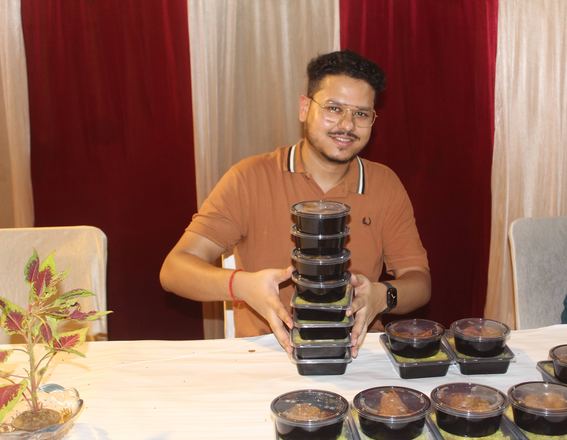
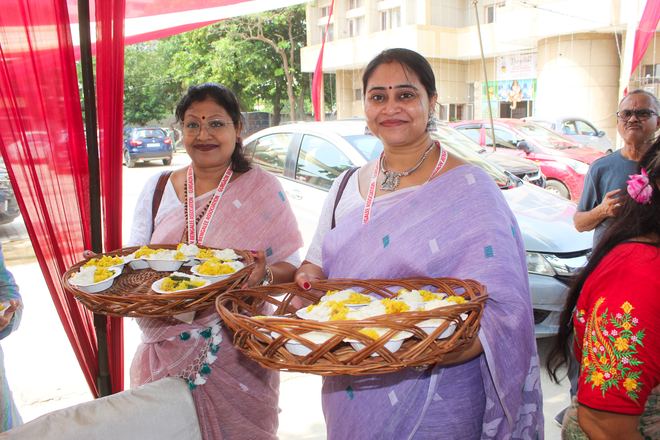
The food first offered to the goddess, then shared with everyone as prasad. In Bengali homes and pandals this is traditionally khichuri, mixed vegetables, chatni and payesh, eaten together on the ground or at long tables.
At GBA: Free for everyone, each day from Shashthi to Navami. The daily menu is on the schedule.
A sacred fire ritual in which offerings are made to the fire with mantras. It is performed on Navami, the last day of the main worship.
At GBA: Tuesday 20 October, 11:00 AM.
On the last morning, the goddess is bid farewell with betel leaf, sweets and blessings, her face touched with sweets as if she were a daughter leaving for her husband's home.
At GBA: Wednesday 21 October, from 9:30 AM.
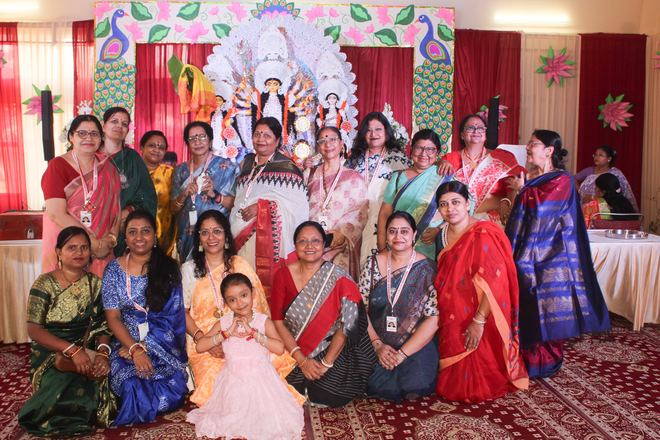
Married women apply vermillion (sindoor) to the goddess and to each other, wishing each other a happy married life, before the idol leaves. It is one of the most colourful moments of the festival.
At GBA: Wednesday 21 October, 10:30–11:30 AM.
The immersion of the idol, symbolising the goddess's return to her heavenly home. A few hours later, Shanti Jal, the sprinkling of peace-giving water, closes the celebration with a blessing for the community.
At GBA: Immersion 3:00–5:00 PM (the slot is set by JPC and may differ). Shanti Jal at 8:00 PM.
Puja timings follow the Bisuddha Siddhanta Panjika and are subject to final confirmation closer to the festival.
See Full Schedule Plan Your Visit